Studio notes / Sorry In Advance
THE FUTURE OF MUSIC IS PHYSICAL
Why the digital generation is rediscovering the beauty of owning something.
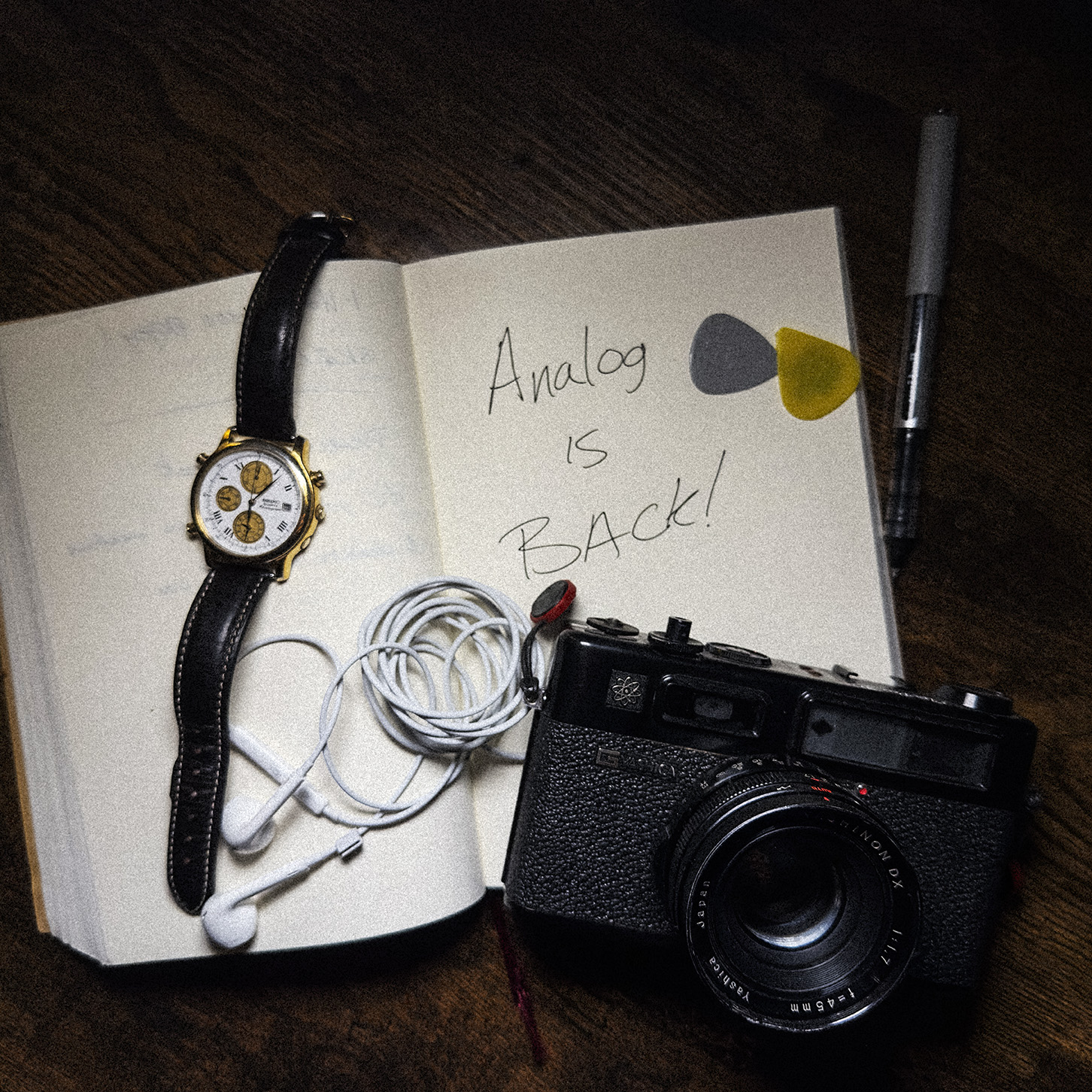
We've spent the better part of two decades making everything digital.
Our music, photographs, movies, books, friendships and memories. Everything accessible, everything instant, everything stored somewhere in a cloud.
And now, strangely enough, we're starting to move backwards.
Or are we?
We traded ownership for convenience
Remember buying an album?
Not downloading it. Not saving it to a playlist. Actually going to a record store, picking it up, looking at the artwork, reading the lyrics and bringing it home.
There was something special about that experience.
You didn't have access to 100 million songs. You had the albums you owned. And you listened to them.
Sometimes because you loved them. Sometimes because you'd spent your last twenty bucks on one and had no other choice.
Either way, you gave the music a chance.
Today, we can skip a song within seconds, forget an artist within minutes and discover another hundred before dinner.
We've never had more music available.
But does having access to everything make us appreciate anything?
The numbers are telling us something
Vinyl has been growing for years. Now CDs are showing signs of a comeback, too.
According to the Recording Industry Association of America, physical music revenues in the United States increased by nearly 26% during the first half of 2026.
CD revenue grew by almost 59%.
That's quite something for a format many people declared dead years ago.
Of course, streaming isn't going anywhere. Nor should it.
But perhaps people are beginning to realize that convenience and connection aren't necessarily the same thing.
Punk rock was always physical
Think about punk before social media.
Photocopied flyers. Handwritten setlists. Stickers on bathroom walls. Demo tapes passed between friends. Records bought directly from bands after shows.
It wasn't just about listening to music.
It was about participating in something.
You could hold a piece of that culture in your hands.
And it didn't have to be perfect. In fact, it was probably better when it wasn't.
That mentality is something we believe is worth keeping alive.
We're part of the contradiction
We're Sorry in Advance, a pop-punk band from Vancouver.
We release music digitally, run our own website, produce our own visual content and use technology to reach people around the world.
We're not against any of that.
Quite the opposite.
Without digital distribution, an independent band like ours would have a much harder time reaching listeners outside our own city.
But we also grew up with a different relationship to music.
One where album artwork mattered. Where you knew the track order. Where the booklet was part of the experience.
We're building a band in 2026 while carrying a lot of those ideas with us.
And maybe that's exactly where things are heading.
Not backwards.
Just towards a better balance.
The algorithm can't sign your record
There's something an algorithm can't reproduce.
The feeling of meeting a band after a show and having them sign your record.
The ticket you kept from the night you saw your favorite artist.
The scratched CD that somehow survived three cars, two apartments and a breakup.
Those things have stories attached to them.
And those stories are part of what makes music matter.
Maybe the future isn't about choosing between analog and digital.
Maybe it's about remembering that music deserves to exist beyond a screen.
Because music was never meant to be just content.
And if the future of music really is becoming more physical, we're all for it.
Sorry in Advance.